Does the Cyber Resilience Act apply to your on-prem AI appliance?
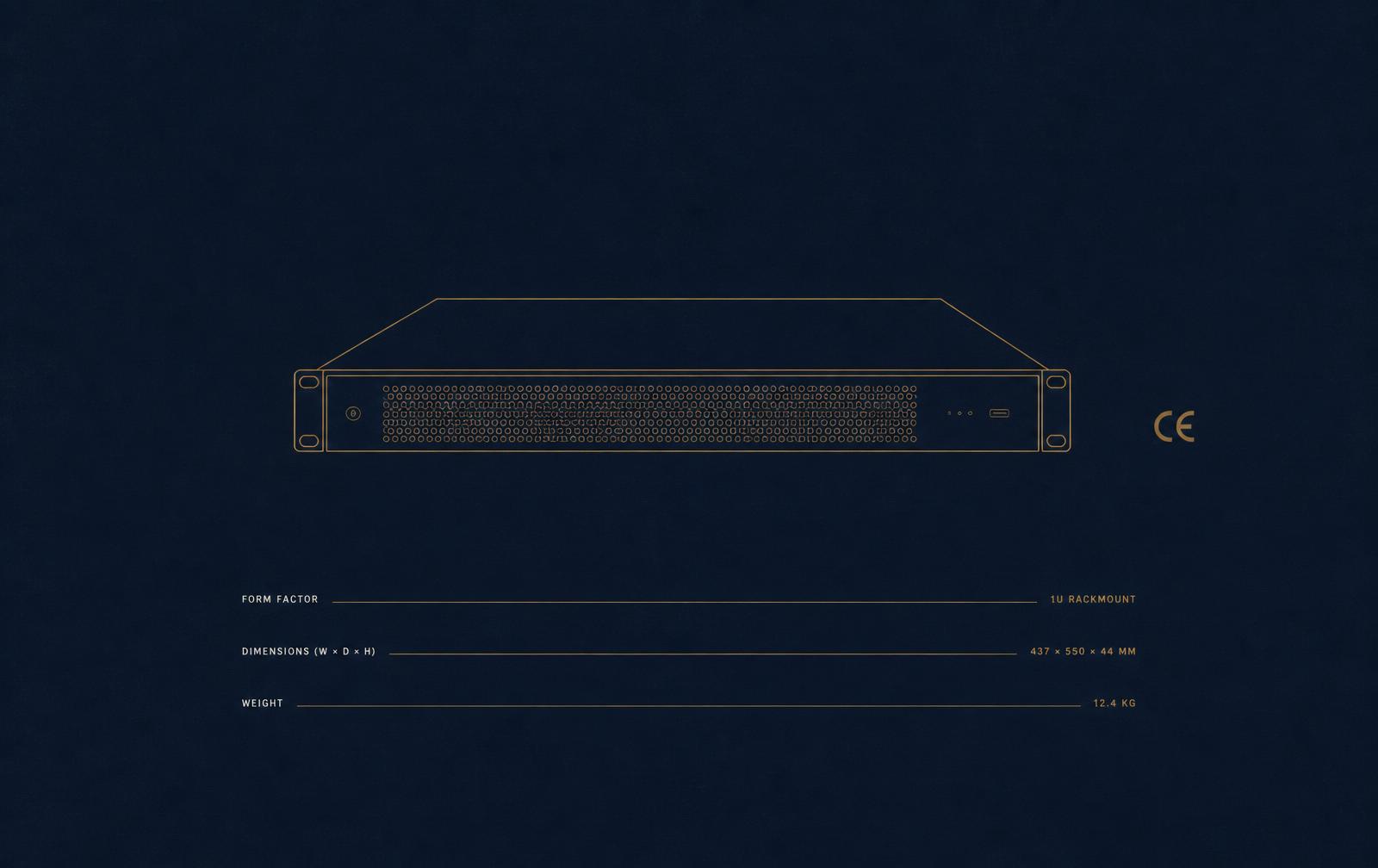
Usually yes. If you ship an on-prem AI appliance into the EU, hardware with your software on it, you are placing a product with digital elements on the market and the Cyber Resilience Act treats you as its manufacturer. That means essential cybersecurity requirements, a vulnerability handling process for the support period, technical documentation and CE marking. Two dates matter: the reporting duty for actively exploited vulnerabilities and severe incidents starts on 11 September 2026, and the full obligation set applies from 11 December 2027. A pure SaaS API is out of scope. The moment you hand a customer an image, a container bundle or a box, you are in.
What does the CRA actually regulate?
The Cyber Resilience Act, Regulation (EU) 2024/2847, regulates products with digital elements: hardware and software placed on the EU market whose intended purpose includes a data connection to a device or network. It is product legislation, not service legislation. That single distinction decides most scoping arguments about AI appliances, because it turns the question away from what the model does and towards how the customer receives it.
An inference server you rack in a customer data centre is a product. A virtual appliance you ship as an image the customer runs on their own hardware is a product too, because software placed on the market separately counts. A hosted endpoint the customer calls over the network is a service, and the CRA leaves it to NIS2 and to contract. Many vendors sell all three, and then discover that one delivery model pulls the whole product line into scope.
Which dates apply, and which are already live?
| Date | What starts | What you need in place |
|---|---|---|
| 10 December 2024 | Regulation entered into force, no obligations yet | Nothing operational, but scoping decisions should be recorded from here |
| 11 September 2026 | Reporting duty for actively exploited vulnerabilities and severe incidents | A named channel, a triage owner, and the ability to notify a CSIRT and ENISA within 24 hours |
| 11 December 2027 | Full application: essential requirements, conformity assessment, CE marking | Technical documentation, risk assessment, SBOM, support period declaration, CE mark on the product |
The September 2026 date is the one teams miss, because it arrives long before CE marking and it is purely operational. From that day, an actively exploited vulnerability in your appliance triggers an early warning within 24 hours, a vulnerability notification within 72 hours, and a final report within 14 days. If your only security contact is a shared inbox someone reads on Mondays, that timeline is not survivable.
Is an AI appliance an important or critical product?
Most AI appliances land in the default class, where self-assessment against the essential requirements is enough. The picture changes if the appliance performs a security function the customer relies on: identity management, network protection, VPN termination, secure boot or key handling. Those categories sit in the higher classes, where a notified body or a harmonised standard enters the process. Read Annex III against your feature list, not against your marketing page, because a bundled reverse proxy or an included secrets manager can move the whole box.
What does compliance look like in practice?
- Define the product boundary in writing: hardware, base image, your software, third-party components, and what the customer supplies. The boundary is the scope of everything that follows.
- Produce a software bill of materials and keep it generated by the build, not maintained by hand. The CRA expects it to be current for the supported version.
- Run and record a cybersecurity risk assessment, then map each essential requirement in Annex I to the control that satisfies it.
- Declare a support period and mean it. Five years is the reference point, and the period you publish sets how long you owe security updates.
- Stand up coordinated vulnerability disclosure: a public contact, a triage commitment, a patch service level and a changelog customers can read.
- Build the reporting path before September: who declares an incident severe, who files with the CSIRT, and where the 24 hour clock is recorded.
- Assemble technical documentation and the EU declaration of conformity, then apply the CE mark when the 2027 date lands.
Sovereignty sold as hardware is sovereignty bought as product liability. The appliance that wins the deal is the same appliance that carries the CE obligation.
How does this interact with the AI Act and NIS2?
The three overlap on evidence rather than on duties. Your CRA vulnerability handling process is the same process a NIS2 supply chain audit asks about, and the same one a customer cites when their supervisor asks how supplier risk is managed. Your SBOM answers component questions from both. When the AI Act high-risk regime lands on 2 December 2027 for Annex III systems, the logging, robustness and accuracy evidence you build for Annex I of the CRA overlaps with the technical documentation that regime expects.
The practical consequence for a small vendor is that one appliance evidence file serves three regimes if you build it once and date every artefact. Building three separate files is how compliance work doubles without improving the product.
Frequently asked questions
- Does the CRA apply if we only ship a virtual appliance, no hardware?
- Yes. Software placed on the market as a separate product is in scope, so a downloadable image or container bundle makes you a manufacturer. Only a hosted service the customer reaches over the network stays outside, and even then your hosting contract still carries NIS2 style duties.
- What has to be ready by 11 September 2026?
- The reporting machinery. A monitored security contact, a decision owner for severity, and the ability to file an early warning within 24 hours, a vulnerability notification within 72 hours and a final report within 14 days. CE marking and full documentation are not required until 11 December 2027.
- Do open-source components in our appliance create obligations for us?
- They create obligations for you, not for the upstream maintainers. Once you integrate a component into a commercial product you are responsible for its vulnerabilities within your product, which is why a build-generated SBOM and a patch pipeline matter more than a licence audit.
- How long must we support the appliance?
- You declare the support period and it should reflect the expected lifetime, with five years as the reference point in the regulation. Publish it, because customers will hold you to it and auditors will read it as your security update commitment.
- Can we self-assess or do we need a notified body?
- Default class products can self-assess against the essential requirements. If your appliance performs a security function listed in the higher classes, such as identity management or network protection, a harmonised standard or a notified body enters the process, so check Annex III against your actual feature set.
Related articles
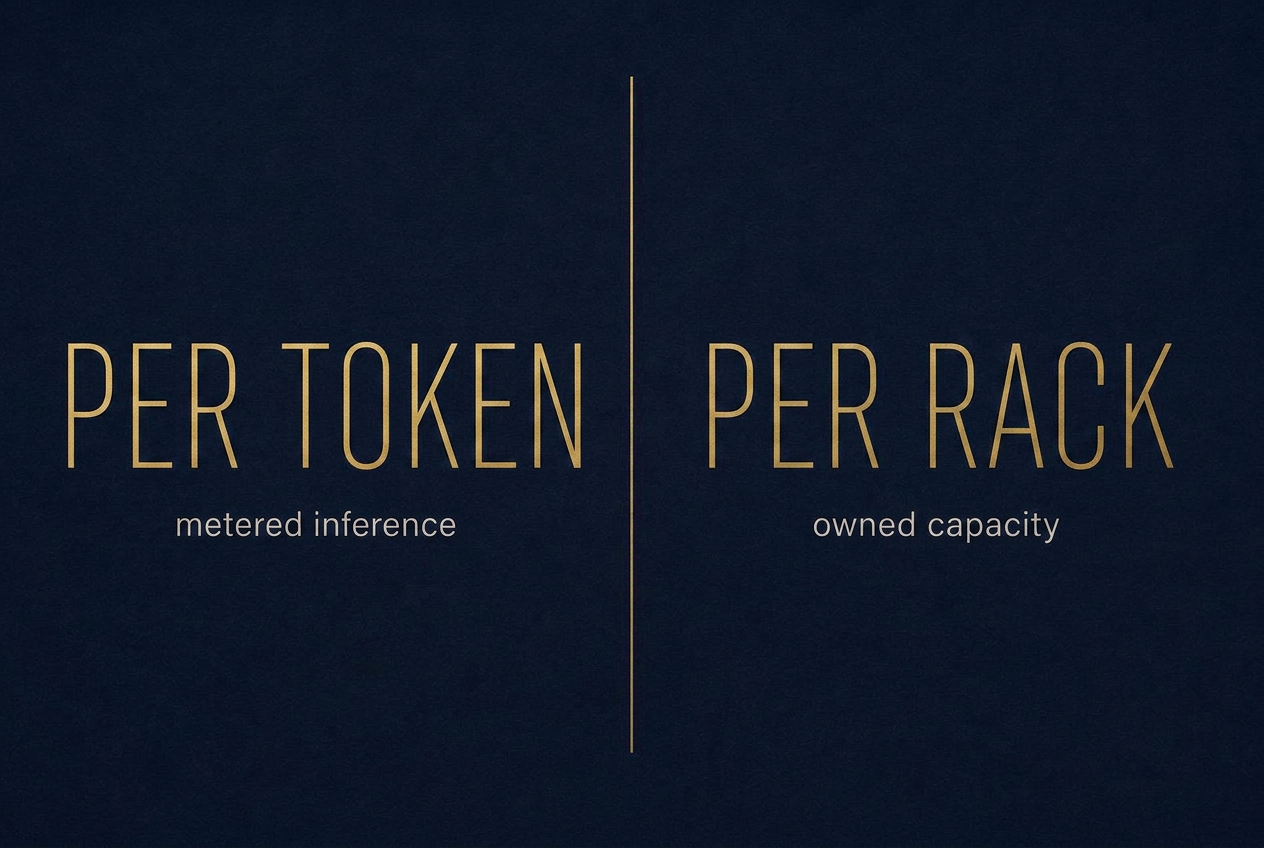
Sovereign AI TCO: On-Prem vs API Over 3 Years
A line-by-line three-year cost comparison of metered API inference, European managed hosting and owned on-premise AI capacity, with the break-even points.
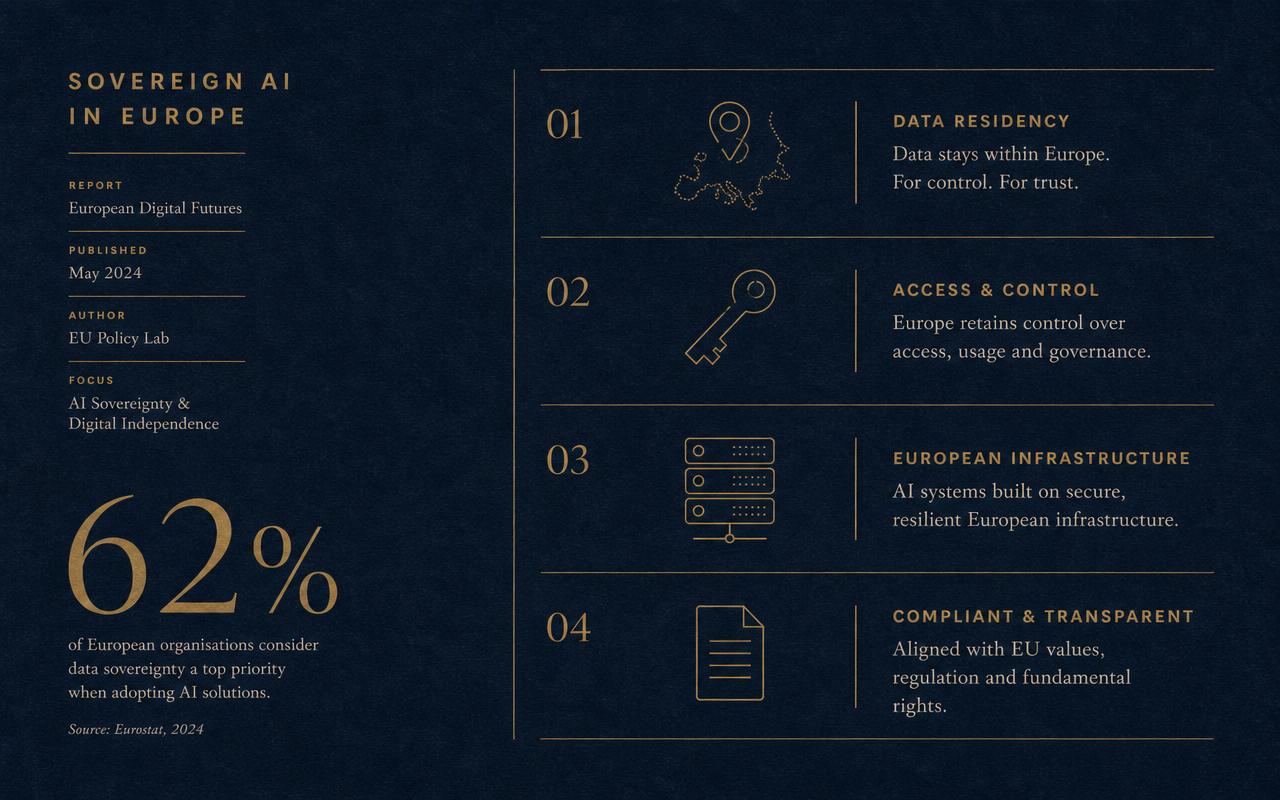
Sovereign AI in Europe: What the 62% Ask For
Most European buyers say data sovereignty decides their AI purchase. Here is the requirement list behind that number, and how to answer it.
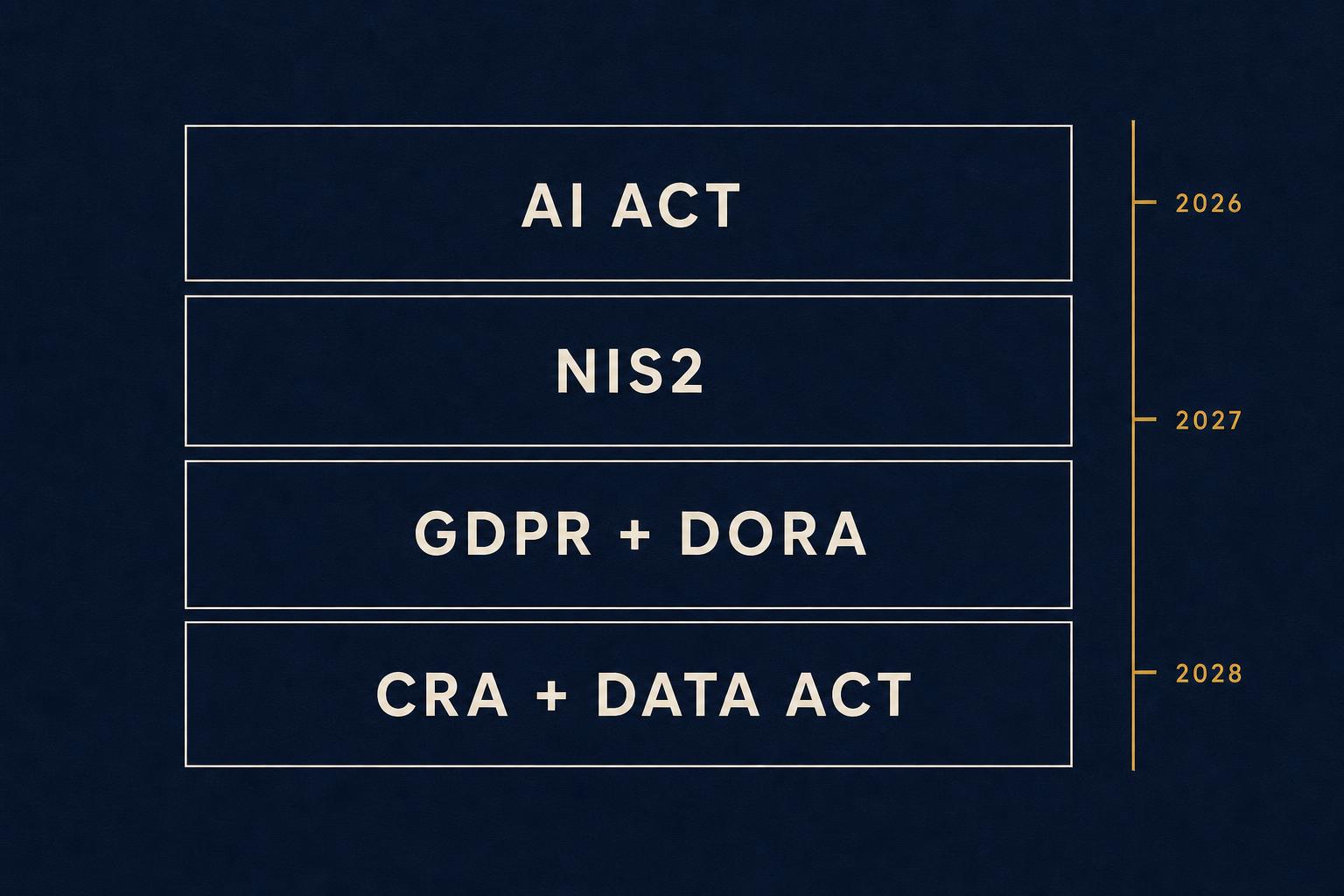
EU AI Compliance Stack 2026: One Map
One dated map of the AI Act, NIS2, GDPR/DORA and CRA obligations that hit AI vendors between August 2026 and August 2028, with EUR-Lex sources.
Next step
Need this as an outcome, not an article? Sovereign deployment.
Sovereignty is a buyer's problem stated as a hosting question. We answer it as an architecture decision: which layer must stay in your jurisdiction, what that costs over three years, and what an auditor accepts as proof.
Explore Sovereign deployment